
How to Start Toilet Training Your Child: 10 Practical Steps for Parents
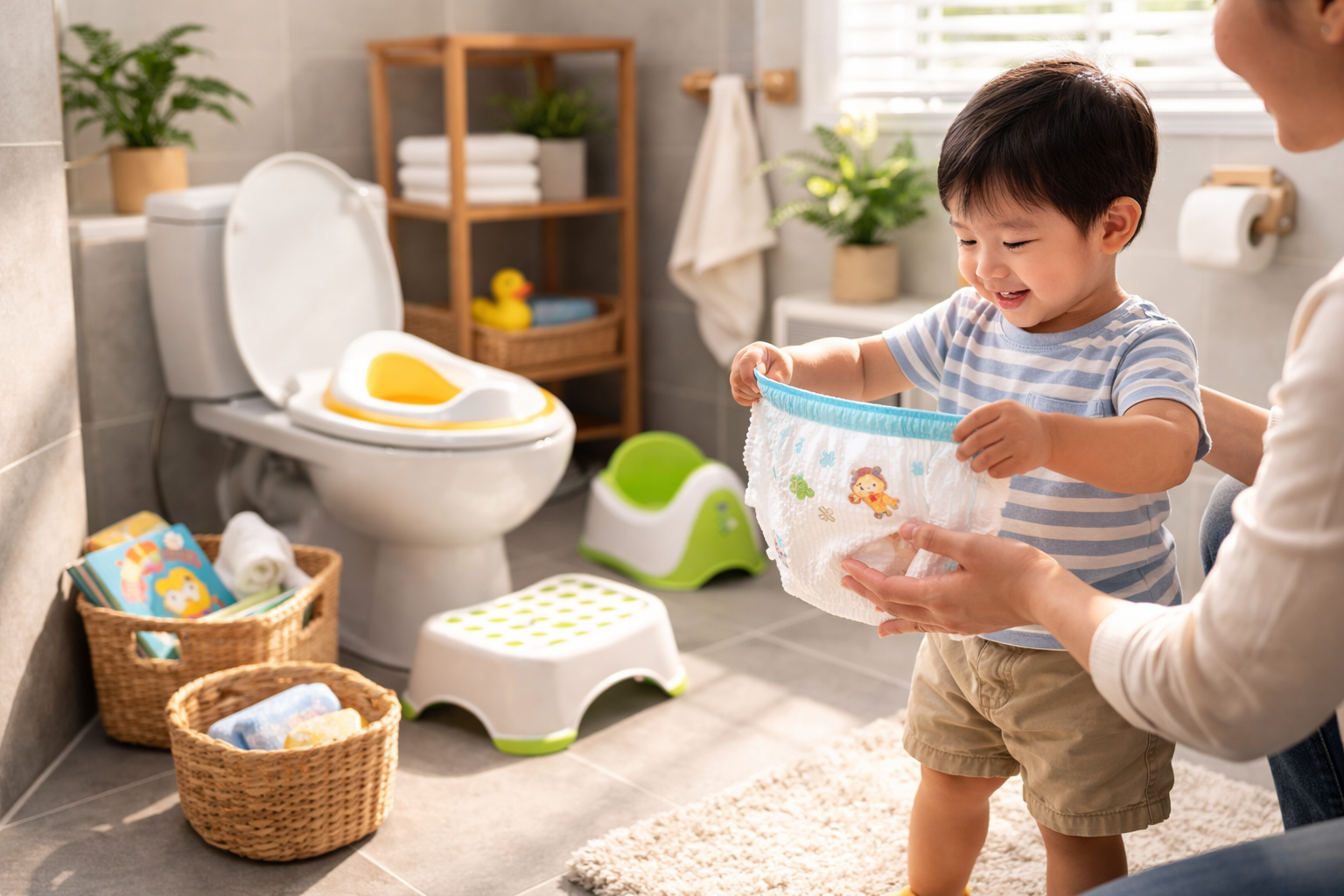
Toilet training is one of those parenting milestones that often arrives with more questions than certainty. Some children seem interested early. Others resist completely. Many parents are left wondering whether they should start now, wait a little longer, or push through accidents and inconsistency in hopes that it will suddenly click.
In practice, toilet training usually goes more smoothly when it begins from readiness rather than urgency. Like many parts of early childhood development, it tends to work best when a child is physically, emotionally and behaviourally prepared.
If you have been asking yourself how to start toilet training your child, the goal is not to rush towards perfection. It is to begin in a way that feels calm, realistic and sustainable for your family.
1. Start with readiness, not pressure
A common mistake is to treat toilet training as something that should begin at a fixed age. In reality, readiness matters more than the calendar.
A child may be ready for toilet training when they begin to show some of the following signs:
they stay dry for longer stretches
they notice when their diaper or pull-up is wet or soiled
they can follow simple instructions
they show interest in the toilet or in wearing underwear
they can communicate basic needs
they are able to pull their pants up and down with some help or independently
Not every sign needs to appear all at once. What matters more is the overall pattern. If a child is showing growing body awareness, increasing independence and some willingness to participate, that is usually a better foundation than starting simply because other children the same age have already begun.
2. Choose a calm window to begin
Toilet training tends to go better when life is relatively steady. If the family is in the middle of travel, illness, a house move, a new sibling adjustment or a major routine change, it may help to wait for a calmer period.
This is because toilet training asks a lot from a young child. They are learning to notice body signals, stop what they are doing, move to the toilet, manage clothing and cope with the frustration of accidents. Starting during a quieter window gives parents more consistency and gives children a better chance of feeling secure.
3. Set up the environment first
Before beginning toilet training, it helps to make the process feel manageable rather than stressful by having a few practical basics ready:
a child-friendly potty or toilet seat insert
a step stool if your child is using the toilet
easy-to-remove clothing
extra underwear and spare clothes
a simple and predictable clean-up routine for accidents
The goal is not to create a perfect system. It is simply to remove unnecessary friction. When the toilet is accessible and clothing is manageable, children are more likely to experience early success.
For some children, switching from taped diapers to pull-ups can also help with the transition. Pull-ups do not automatically toilet train a child, but they can support the process by allowing the child to practise pulling clothing up and down, checking whether they are dry, and becoming more aware of their bodily routines. Pull-ups can also be helpful in transitioning a child into wearing underwear by building familiarity and confidence.
4. Use simple, consistent language
Young children respond best to short, clear phrases. Try language such as “Let’s try the toilet” or “Tell me when your body needs to go”.
Simple language works better than long explanations. Repeating the same words each day also helps children connect body sensations with what they need to do next.
5. Start with routine toilet times
When parents think about toilet training, they often imagine needing to watch for every signal all day. In practice, it is usually easier to begin with predictable times when children are more likely to need the toilet.
after waking up (including from naps)
after meals
before bath time
before leaving the house
before bedtime
Offering the toilet at these natural points creates rhythm without turning the whole day into a struggle. At the start, it is often better to invite rather than demand. A calm “Let’s try” is usually more helpful than a tense “You need to go now.” Even if the child sits on the toilet and nothing happens, that can still be useful. The goal in the early stages is often to build familiarity with the routine, reduce hesitation, and help the child feel comfortable with the process.
6. Dress for success
Clothing matters more than many parents expect. Tight waistbands, tricky buttons and overalls can slow children down and make accidents more likely, even when they recognised the need to go in time.
Loose shorts, elastic waists and easy layers give children a better chance of managing the routine independently. Toilet training is not only about awareness. It is also about being able to act quickly and confidently.
7. Expect accidents and respond calmly
Accidents are part of toilet training. They do not automatically mean a child is not ready, nor do they mean the process is failing.
Children learn through repetition. They are connecting body sensations to actions, and that takes time. When accidents are met with irritation, shame or visible disappointment, children can become more resistant or anxious around toileting.
A more helpful response is brief and neutral: clean up, acknowledge what happened and remind the child what to do next time.
8. Avoid turning it into a power struggle
Young children often resist when they feel pressured. This is especially true in areas closely tied to the body, such as eating, sleeping and toileting.
If toilet training becomes a battle, it can help to step back and reduce the intensity. Frequent prompting, visible frustration or trying to make it happen quickly can create tension that slows progress.
Children usually do better when adults stay steady. Clear routines, simple reminders and calm encouragement tend to work better than repeated persuasion or over-celebration.
9. Understand that bowel training can take longer
Some children become comfortable with passing urine in the toilet before they are ready to do the same for bowel movements. This is common.
The sensation can feel different, and some children become cautious or withholding. If that happens, avoid pressure. Keep routines calm, watch for signs of discomfort and support your child without making the issue feel emotionally loaded.
Progress is still progress, even when one part of toileting develops more slowly than another.
10. Keep home and school aligned
Consistency matters more than intensity. Children benefit when the same expectations and language are used across the day. If your child is in preschool or childcare, it helps when home and school are aligned in how the child is being supported, whether they are using diapers, pull-ups or underwear, and how adults are responding to accidents or attempts.
This does not mean every day will look identical. It simply means the child receives a similar message across environments, which makes learning easier.
When it helps to pause
Sometimes toilet training begins reasonably well, but the child becomes highly resistant, distressed or begins withholding urine or stools. In these situations, a short pause may be more helpful than forcing the process forward.
Pausing does not mean giving up. It means recognising that the child may need a little more time, support or maturity before trying again. Often, families find that a calmer restart a few weeks later works better than pushing through increasing resistance.
How Junior Champs supports Toilet Training and Self-Help Skills
At Junior Champs Preschool, we understand that toilet training is not just about getting a child out of diapers. It is part of a wider process of building independence, confidence and everyday self-help skills. Children usually do best when home and school work in step, using consistent routines, calm responses and age-appropriate expectations.
We work with parents to support a calm and consistent transition from diapers to more toilet-aware routines. Where appropriate, we may encourage the use of pull-ups rather than taped diapers, as pull-ups allow children to practise some of the actions involved in toileting, such as pulling them up and down during toilet visits. This helps children become more aware of the sequence and routine involved.
Teachers can also support children by encouraging them to:
check whether their pull-up is dry
tell an adult when they feel uncomfortable or need to go
sit on the toilet regularly, even if nothing happens
become familiar with the bathroom routine step by step
Sometimes, simply sitting on the toilet without pressure is already an important part of the learning process. It helps children grow comfortable with the environment, understand the routine, and develop confidence over time.
Most importantly, we believe toilet training works best when home and school use similar language, expectations and routines. A child usually makes steadier progress when the adults around them respond calmly, consistently and without shame or pressure.
If you are exploring a preschool environment that values close parent communication, everyday routines and confident early development, you can book a centre visit or find a school near you.
You may also like to hear from our parents to get a feel for how families experience the Junior Champs environment.
A gentle start usually goes further than a perfect one
Toilet training rarely needs to begin with pressure, urgency or comparison. It usually starts best with readiness, a calm environment and simple, repeated opportunities to practise.
Some children move quickly. Others take longer. Both can be entirely normal. The goal is not just to get out of diapers. It is to help a child build body awareness, confidence and independence in a way that feels steady and supported.