
Why Free Play Is Essential for Early Childhood Development
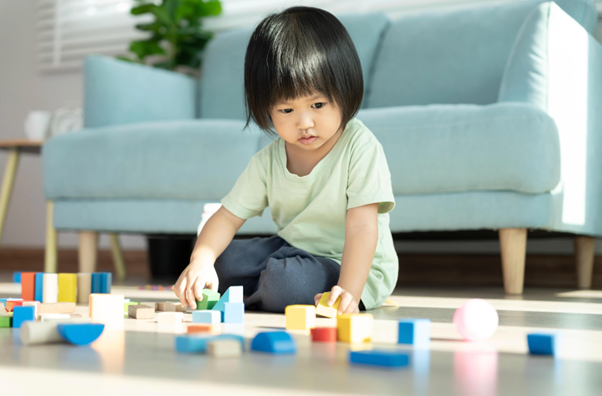
Free play, meaning child-directed, unstructured activity without adult-defined goals or rules, is one of the most researched topics in early childhood development. Research accumulated over decades consistently shows that time spent in free play produces measurable benefits across cognitive, social, emotional and physical domains. This article summarises those findings and explains why parents and educators should treat free play as a developmental priority rather than seeing it simply as a break between structured activities.
Free Play Builds Self-Regulation
Self-regulation develops through repeated opportunities to manage attention, impulses and emotions without constant adult direction. Free play provides many of these opportunities naturally. Children have to wait for turns, adapt when a game changes, persist when something does not work, and manage frustration when other children do not follow the play in the way they expected.
The Center on the Developing Child at Harvard University identifies play as an important context for practising executive-function skills, including attention, working memory and self-control. These capacities allow children to stay engaged with a task, remember what they are trying to do and regulate their responses when difficulties arise. As children grow older, these same skills support classroom learning, independence, problem-solving and the ability to cope with frustration and changing expectations.
Free Play Supports Language Development
During free play, children use language in ways that are richer and more varied than in most structured activities. They negotiate roles, narrate scenarios, make requests, ask questions and invent new uses for familiar words—all of which demand and develop communicative skill.
Play gives young children frequent opportunities to build language through conversation, storytelling and interaction with others. Research comparing children’s speech across different preschool activities found that children aged four to five used significantly more complex language during free play than during guided or routine activities. They spoke more, used more multi-word utterances and employed language more frequently in symbolic and communicative ways.
This is because free play encourages spontaneous conversation, exposing children to new vocabulary as they describe actions, share ideas and negotiate with others.
Free Play Develops Social and Emotional Skills
Children learn how to read social cues, negotiate conflict, share, take turns and respond to others’ emotions primarily through direct, repeated experience with peers. Free play is where most of that experience accumulates.
UNICEF’s position on play states that through play, children learn to build connections, develop resilience as well as navigate relationships and social challenges. Its importance is underscored by the fact that, in crisis settings, play is also used to help restore a sense of normalcy, connection and safety for children.
In everyday preschool settings, this plays out through the social problem-solving that free play requires: working out who plays what role, what the rules are and what happens when someone breaks them. These are not trivial interactions. They are the contexts in which empathy, negotiation and emotional awareness are practised and gradually consolidated.
Free Play Fosters Creativity and Problem-Solving
When children direct their own play, they encounter problems without predetermined solutions: how to build something that keeps falling, how to allocate roles equitably, how to use available materials for a purpose they were not designed for. These moments are where flexible, creative thinking develops.
The American Academy of Pediatrics (AAP) clinical report The Power of Play states that play is fundamentally important for developing the problem-solving, collaboration and creativity skills that require executive functioning, and identifies these as critical for adult success. The report further notes that child-driven play enhances brain structure and function, and that when children are free to direct their own activity, they practise making decisions, weighing options and responding to challenges as they arise.
Free play also gives children room to follow their curiosity, test ideas and explore what happens when they try something new. That process helps turn questions and experimentation into part of everyday learning.
Free Play Supports Physical Development and Health
Active free play gives young children regular opportunities to run, climb, jump, balance and experiment with movement. These experiences help develop gross motor skills, coordination and physical confidence while also contributing to children’s overall activity levels.
The American Academy of Pediatrics notes that many of the fundamental movement skills children need later in childhood, including running, leaping and climbing, are developed through free play. It recommends ample opportunities for free play during the preschool and early primary years, when these basic skills are still being established and combined.
Free play can also make a meaningful contribution to how active children are during the day. Research in childcare settings has found that preschoolers were more active and spent less time sedentary during child-initiated play than during teacher-led activity, with outdoor free play providing particularly frequent opportunities for movement.
Free Play Builds Attention and Readiness to Learn
Lastly, a child’s capacity to focus, sustain attention and manage distraction is not separate from their play experience—it is partly a product of it. Free play requires children to hold a goal in mind, ignore competing distractions and manage their own behaviour in order to keep a game going. These are the same capacities that underpin classroom engagement.
Research also suggests that free play can support children’s ability to refocus afterwards. A study of 72 preschoolers found that children showed greater attention during classroom circle time following outdoor free play than after indoor play. The findings suggest that opportunities for active, unstructured play can support the attention and behavioural control children need when they return to more focused classroom activities. Although free play is sometimes seen as time away from learning, it can help children return to structured activities with greater focus.
Time Well Spent
The value of free play lies in the range of development it supports at once. It gives children opportunities to explore, make choices, solve problems and build confidence, making it an important consideration when parents evaluate a preschool environment.
At Junior Champs, free play is built into the structure of each day rather than treated as time between activities. Our thematic curriculum creates the conditions for play that is purposeful and rich without being adult-directed, and our teachers are trained to facilitate and observe rather than simply supervise. If you would like to see how that looks in practice, we welcome you to visit. Book a centre tour with Junior Champs today.