
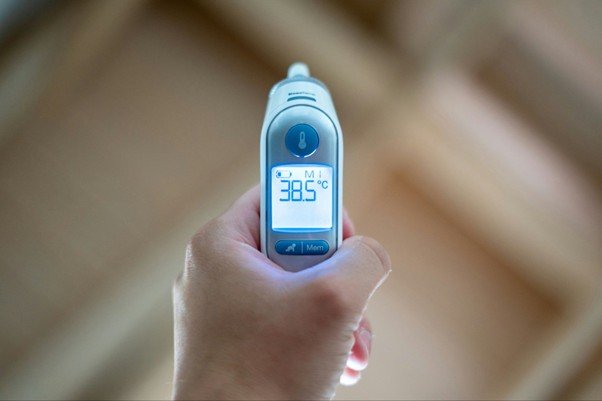
Your child feels a little warm. They seem tired but they are eating. You are not sure. If this sounds familiar, you are not alone, and the good news is that there is a reasonably clear framework for making this call. Here is what Singapore childcare centres require, what happens if a fever develops during the day and how to decide with more confidence and less guilt.
What Your Childcare Centre Is Required to Do
Childcare centres in Singapore are licensed by the Early Childhood Development Agency (ECDA) and follow health guidelines set by the Ministry of Health (MOH). These guidelines set out clear requirements for how illness is managed across all licensed centres.
The standard fever threshold is 37.5°C, measured at the ear. If your child arrives at this temperature or above, they will not be admitted. If a fever develops during the day, the centre must:
Move your child to a separate area away from the rest of the class
Monitor their temperature and general condition
Call you or your emergency contact promptly
Ask you to collect your child as soon as possible
Centres cannot administer fever medication without prior written consent from you, and even with consent, they will still ask you to collect your child once a fever is confirmed. A call saying your child has a temperature is a request to come immediately, not an update for your awareness.
What the Teachers Will Do
When a teacher notices a child seems unwell, through a routine temperature check or their own observation, they follow a set process. They will take the child’s temperature, record it, inform the centre director and contact you.
While your child waits to be picked up, a trained educator will keep them comfortable, ensure they have water and monitor for any changes in condition. They will also separate your child from the group, so your child can rest and to reduce the risk of transmission to others.
You will receive a phone call in most cases. Centres treat a confirmed fever as time-sensitive, and a phone call gets a faster response than a message.
Should You Send Them In? A Quick Guide
Keep your child home if they:
Have a temperature of 37.5°C
Had a fever at any point in the last 24 hours, even if it has since come down
Were given paracetamol or ibuprofen that morning
Vomited or had diarrhoea in the last 24 hours
Have a rash, persistent cough, or other symptoms alongside feeling warm
They are likely fine to go in if:
Their temperature has been normal for at least 24 hours without medication
They are eating, drinking and behaving as they normally would
No other symptoms are present
A child given fever medication that morning should stay home even if they seem well. The medication may be suppressing a temperature that will return by mid-morning, resulting in a call to collect them partway through the day.
What to Do If You Cannot Stay Home
Working parents often have limited flexibility when a sick day arises. These are worth organising before you need them:
Identify a backup caregiver in advance, such as a grandparent, relative or trusted neighbour who can step in at short notice
Check your leave entitlements, as some employers offer childcare sick leave or flexible work arrangements for situations involving an unwell child
Keep a basic kit ready, including a reliable thermometer, oral rehydration solution and any medications your child’s doctor has previously recommended
Having these in place before a sick day happens means you are making arrangements instead of decisions under pressure.
When to Call the Doctor
Fever in young children can be hard to read, and it is completely reasonable to feel unsure about what to do. If something does not feel right, or if you are simply not sure, call your GP or paediatrician rather than waiting it out. Most clinics in Singapore offer same-day appointments for young children, and a quick call to a professional will give you far more certainty than anything online can.
If clinics are closed and you are concerned, 24-hour GP clinics are available island-wide, and any hospital emergency department can assess a young child.
Outbreaks and Heightened Precautions
Things may be slightly different when MOH or ECDA issues health advisories during an outbreak, such as HFMD or influenza surges in preschool settings. During this time, standard exclusion thresholds may be raised and recovery periods extended. Children with HFMD must stay home until all blisters have fully dried, regardless of how they otherwise seem. Your centre will communicate any changes to protocol, but a direct call is the fastest way to confirm what applies on a given day.
When in Doubt, Keep Them Home
Childcare centre protocols are designed to protect your child and everyone else in the class. Following them, including the parts that are inconvenient, is what makes shared care environments safe for all children. If it is a close call, the default is reliable: fever-free for 24 hours, no medication masking a temperature and a child who is ready to be there.
When something comes up with your child’s health during the day, you want to hear about it immediately and know exactly what is being done. At Junior Champs, we have clear protocols in place for managing illness, and we contact parents directly the moment a concern arises without delay. If you would like to see how we handle these situations day-to-day, come visit and speak to us. Book a tour with Junior Champs today.