
Staff Turnover at Your Childcare Center: What Parents Should Watch For
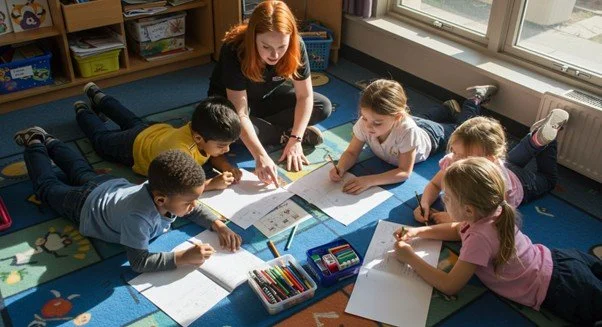
The early childhood sector in Singapore has one of the higher staff turnover rates, a fact that never makes it into enrolment brochures. For young children, who build security through consistent relationships with familiar adults, frequent changes in teaching staff are not a neutral administrative matter. They affect how settled a child feels, how well their developmental needs are understood, and how much continuity exists between what happens at home and what happens in the classroom.
Knowing what to watch for puts parents in a stronger position to ask the right questions. Here’s what to watch for:
Frequent Changes to Your Child’s Key Teacher
Most quality early childhood programmes assign a key teacher to each child, a primary point of contact who tracks development, communicates with parents and builds the familiarity that makes a child feel secure. When that person changes repeatedly within a short period, the effect on a young child can be significant, even if they do not have the language to express it directly.
Watch for situations where your child has had more than one key teacher within a single year, where the person who greets them in the morning is regularly unfamiliar or where references to “Miss [name]” shift without any prior communication from the centre. A single transition, handled with care and advance notice, is a manageable event. A pattern of them, however, is a different matter.
Some Context to Keep In Mind…
Not every instance of unfamiliarity or change points to a staffing problem. A few scenarios that fall outside what the above is intended to flag:
Morning reception duty is typically rostered across the teaching team on a rotating basis. An unfamiliar face at the door does not on its own indicate a change in your child’s class teacher.
Probationary departures are a normal part of how centres assess fit. A staff member who leaves during or shortly after a probationary period is a different situation from one that reflects ongoing retention difficulties.
Performance or conduct-related departures are, in most cases, a sign that the centre is managing its team responsibly rather than evidence of instability.
What warrants closer attention is a pattern of changes that arrive without explanation, without notice, or without any effort to ease the transition for the children involved. If you’ve noticed staff changing, it helps to get a clearer picture from the centre first. The questions towards the end of this article are a good place to start.
A Classroom Full of Unfamiliar Faces
Young children orient themselves in part through the people around them. A classroom where the supporting staff changes frequently, even if the lead teacher remains, can feel unsettling in ways that are difficult for a child to express. Children in this situation may become clingier at drop-off, more unsettled during transitions or less engaged during activities they previously enjoyed.
This is worth distinguishing from the normal adjustment that follows any change. What signals a deeper instability is when the unfamiliarity is ongoing rather than temporary, when your child never has enough time to get used to one change before the next.
Gaps in Knowledge About Your Child
A well-staffed centre (with reasonable continuity among its teaching team) accumulates knowledge about each child over time. Teachers who have been present consistently know that a particular child needs extra time during transitions, or finds loud environments difficult, or responds well to a specific kind of encouragement. That knowledge resets when staff change frequently.
Pay attention to whether the adults at your child’s centre can speak with specificity about them. Vague or generic responses during check-ins, repeated requests for information you have already provided or a sense that your child is being observed fresh each time rather than known across time are all indicators that continuity has been compromised.
Changes in Classroom Atmosphere
Children are sensitive to the emotional tone of their environment, often before adults are. A classroom that has recently lost experienced staff, or that is being managed by a succession of relief teachers, tends to feel different even when the physical environment remains unchanged. Routines may become less consistent. Transitions between activities may feel less organised. The general sense of calm that characterises a well-run early childhood setting may be harder to find.
During pick-up or any time you spend in or near the classroom, notice whether the environment feels settled and purposeful. A classroom in frequent flux tends to show it.
Communication That Has Become Inconsistent
One of the less obvious effects of high staff turnover is its impact on parent communication. When teachers leave, the relationships they have built with families leave with them. Their replacements, left to manage an unfamiliar group of children while learning a new environment, may not maintain the same frequency or quality of updates, or at least not at first.
If the written notes, verbal check-ins or formal updates you previously received have become less regular or less specific, it is worth raising directly with the centre. A reduction in communication is sometimes the first sign that the teaching team is under pressure.
Reluctance to Discuss Staffing Openly
A centre confident in how it manages its people will generally answer staffing questions without deflection. Responses that are vague, defensive or that reframe the question rather than address it (“we always ensure full coverage”) should be noted. Parents are entitled to know the general composition of the team working with their child and to ask about how transitions are managed when staff leave.
If direct questions about turnover are consistently met with reassurance rather than information, that gap itself can be telling.
What You Can Do As a Parent
If several of the above are present, these steps give you a more complete picture before deciding how to proceed:
Ask the centre directly about their staff retention rate and how long the current teaching team has been in place.
Request a meeting with the lead teacher or centre director to discuss continuity arrangements for your child specifically.
Note whether transitions are communicated to parents in advance, with time for your child to adjust, or announced after the fact.
Speak with other parents about their observations, particularly those whose children have been enrolled longer.
Review any written communication from the centre over the past term and assess whether it has been consistent in tone, frequency and detail.
Trust your child’s behaviour as a data point. Persistent unsettledness, reluctance to attend or regression in areas where they had previously made progress are worth raising with the centre formally.
What You Can Ask About Staffing
Asking well can help you get better answers. The following are specific enough to invite a considered response, and well within the scope of what a centre should be comfortable addressing.
On continuity:
How long has the current lead teacher for my child’s class been with the centre?
How does the centre manage the classroom transition when a teacher leaves mid-year?
How are children and families introduced to a new teacher joining the class?
Is there a secondary teacher or co-teacher who maintains continuity if the lead teacher is absent?
How is information about individual children (their needs, routines and progress) passed on when there is a change in the teaching team?
On the nature of changes:
When staff do move on, how does the centre typically handle communication to affected families?
Is it possible to understand, in general terms, whether recent changes were planned or unplanned?
How often has the teaching team in my child’s class changed over the past year?
On notice and process:
What notice do parents receive before a change to their child’s teaching team takes effect?
Is there a handover period where the outgoing and incoming teacher work alongside each other?
How does the centre support children through the adjustment when a familiar teacher leaves?
A centre that manages these transitions well will have considered answers to most of the above.
The Faces Your Child Sees Every Morning Matter
Young children do not distinguish between “staffing challenges” and “the person who used to know my name isn’t here anymore”. They experience the difference directly, in the small but accumulating ways that shape how secure they feel at school. Parents who stay attentive to those signals and who know how to act on them give their children the best chance of having an early education experience that is consistent enough to be beneficial.
The team at Junior Champs understands that the faces your child sees every morning are not interchangeable. Our teachers are carefully selected, professionally trained in early childhood education and supported to grow within the centre rather than move on from it. We maintain small class sizes specifically to ensure that every child is genuinely known by the adults in their classroom and that parents are never left wondering who is responsible for their child’s care on any given day.
Staff continuity is something we treat as a measure of quality. If you would like to learn more about our team and how we work, we invite you to get in touch, or book a centre visit.