
When Teachers Give Vague Answers: How to Ask Better Questions
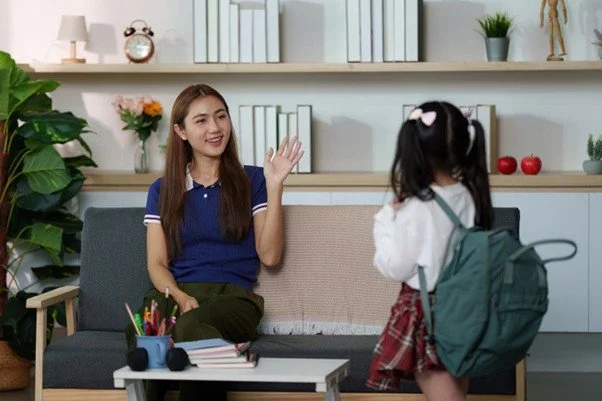
Parent-teacher communication works best when both sides feel comfortable being specific. If you have walked away from a conversation with your child’s teacher feeling informed and reassured, that is a good sign. However, if you have walked away with little more than “they’re doing well”, it may be worth thinking about how those conversations are structured, and what you can do to make them more useful for everyone, your child included.
Understandably, it takes two hands to clap. Meaningful communication does not depend on one side alone. It works best when parents and teachers each make an effort—parents by asking clear, focused questions, and teachers by offering responses that go beyond the surface.
How to Tell If You Are Getting Enough Information
Not every brief update signals a problem. Teachers often speak to many parents across a busy week, and a short exchange at pick-up time is naturally limited. Even so, there are signs that the information you are receiving may not be giving you a full picture of your child’s experience.
Pay attention to whether the updates you receive are consistent and specific. If every conversation produces the same broad phrases (“doing well”, “settling in nicely”, “could focus a little more”) without any reference to particular activities, interactions or moments, that is worth noticing. Similarly, if you raise a specific concern and the response addresses it only in general terms, you may need to revisit it with a more direct question.
It is also useful to consider the format and frequency of communication. Some schools rely heavily on verbal exchanges, which are easy to keep brief. If written updates, progress notes or scheduled meetings are not part of your current experience, you can suggest it to the school, as these create a more reliable basis for ongoing communication.
Starting a Cooperative Relationship When the Teacher Has Not
Some teachers are proactive communicators who reach out regularly with updates. Others are skilled in the classroom but less comfortable initiating conversations with parents. If your child’s teacher falls into the second camp, the responsibility for opening that channel might inadvertently fall to you, and that is entirely reasonable.
Begin with a written note or email rather than an impromptu doorstep conversation. This gives the teacher time to prepare a considered response and signals that you are interested in a real exchange, not a complaint. Keep your tone curious rather than critical. Something as simple as “I would love to find 10 minutes to hear how [child’s name] is getting on in more detail” is enough. Expressing appreciation for what you have observed, even briefly, helps establish goodwill before any concerns are raised.
The goal at this stage is not to extract information but to build a certain trust that makes honest communication easier for both parties.
How to Ask Better Questions
When a conversation does take place, the quality of your questions will largely determine the quality of the answers you receive. Closed questions (“Is she doing all right?”) invite closed answers. Specific, open questions invite specific, open answers.
1. Ask about observable behaviours, not impressions.
Instead of “Is he happy at school?”, try “Has he been joining in during group activities, or does he tend to stay on the edge of things?” Teachers can answer the second question with something concrete. The first requires them to summarise a child’s emotional state in a single word.
2. Reference specific subjects or contexts.
“How does she approach tasks she finds difficult?” is more useful than “Is she confident?” It gives the teacher a clear frame of reference and makes it harder to answer in generalities.
3. Invite examples.
A simple follow-up such as “Could you give me an example of what that looks like?” moves the conversation from interpretation to evidence. Teachers who struggle to produce examples may not know the child as well as they should, which is itself useful information.
4. Name the concern directly, but without blame.
If your child has mentioned something specific, such as feeling left out or finding a particular subject overwhelming, say so. “He has mentioned that he finds transitions between activities difficult. Is that something you have noticed?” This gives the teacher something real to respond to.
5. Ask what you can do at home.
This reframes the conversation as a shared endeavour. Teachers are generally more forthcoming when they feel like a partner rather than someone being assessed.
What to Do If It Still Does Not Work
If you have made sincere attempts to communicate and the pattern of vague or dismissive responses continues, it is reasonable to take the matter further.
Request a formal meeting through the school’s administrative channels rather than through the teacher directly. This signals that you are treating the matter seriously without making it personal. Prepare a brief written summary of your concerns and the previous exchanges that prompted them. Having a record is useful if the conversation needs to be escalated.
If the formal meeting does not result in meaningful change, speaking with the principal or centre director is appropriate. Frame this not as a complaint about the teacher’s character but as a concern about communication and your child’s progress. Most school leaders will take this seriously, particularly when a parent has clearly made prior attempts to resolve the issue at classroom level.
Removing your child from the class or school is an option, but it is generally better to exhaust the available channels first. Children form attachments to their environments, and transitions carry their own costs.
Other Things Worth Trying
Before or alongside any of the above, there are practical steps that can give you a more complete picture.
Speak to other parents: You may find that vague responses are common across the class, which points to a communication style rather than indifference to your child specifically. Alternatively, you may discover that other parents have had more success with a particular approach. Neither conversation requires gossip. A simple “How have you found communication with the teacher this term?” is enough to open it.
Keep a brief log: Note what your child tells you about school on a regular basis. Over time, this gives you a richer picture of their experience and provides specific details to bring into teacher conversations, details that are harder to deflect with generalities.
Review written updates: Check any newsletters, progress notes or assessment records the school provides. These sometimes contain more specific information than verbal exchanges, and they can serve as a useful starting point (“I noticed the progress note mentioned X. Could you tell me more about that?”).
No confrontation is necessary. Used consistently, they give you a fuller picture of your child’s experience and make every teacher conversation more grounded.
On the Value of a Well-Placed Question
There is an old idea that the quality of an answer depends on the quality of the question. In parent-teacher communication, this turns out to be almost exactly true. Vague questions produce vague answers, not because teachers are withholding, but because there is nothing specific to hold on to. The parents who consistently come away with useful information are not the loudest or the most persistent. Instead, they are the ones who arrive with something precise to ask. That is a skill that improves with practice.
At Junior Champs, we believe that parents should never have to wonder how their child is doing. Our low student-to-teacher ratio means that your child’s key teacher knows them well, not just in terms of academic progress but in terms of how they move through their day, what energises them and where they need a little more support. We make a point of communicating proactively with families, and we welcome questions of any kind, specific ones especially.
If you would like to see what that kind of relationship looks like in practice, we would love to hear from you. Get in touch with the Junior Champs team today.