
7 Popular Childcare and Preschool Approaches in Singapore
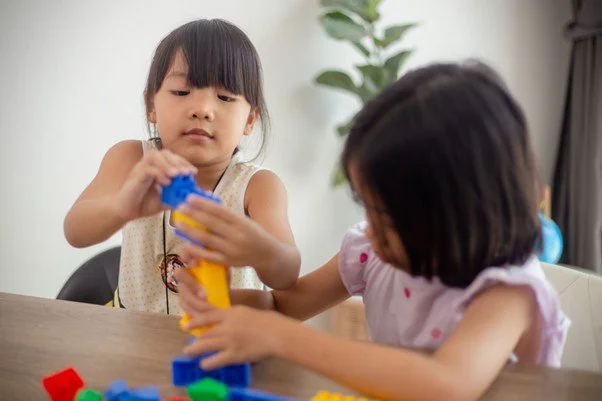
When parents compare preschools in Singapore, the conversation often starts with fees and convenience. The curriculum approach, however, is what determines the texture of your child’s daily experience at school. Whether a centre follows a structured academic model or a more child-led philosophy makes a difference to how children engage with learning in their earliest years. Here is a quick overview of the most widely used approaches in Singapore.
1. Thematic Learning
Thematic learning organises the curriculum around a central topic or theme, such as animals, seasons, the community or the environment. Across a term or a set number of weeks, all subjects and activities connect back to that theme, giving children repeated exposure to the same ideas through different lenses: language, art, numeracy, science and social play.
The approach suits young children well because it mirrors how they naturally make sense of the world, and that is through context and connection rather than isolated subjects. A theme on “living things”, for example, might involve growing plants in class, counting insects, reading stories about animals and discussing what different creatures need to survive. Each activity reinforces the others.
Coupled with a bilingual curriculum, thematic learning is the approach used at Junior Champs. In our centres, lesson planning, classroom environments and daily activities are built around rotating themes designed to develop children across multiple domains simultaneously. It is a philosophy that treats every part of the day as an opportunity to grow, and how we make learning fun and exciting.
2. Montessori
Developed by Italian physician Maria Montessori in the early 20th century, the Montessori approach centres on child-led learning within a carefully prepared environment. In place of formal teaching, it encourages children to follow their natural interests through hands-on exploration and self-directed activity, building independence, curiosity and a love of learning from the earliest years.
The role of the teacher in a Montessori classroom is primarily to observe and guide rather than instruct. Mixed-age groupings are common, with children typically grouped across a three-year age span. The approach places considerable emphasis on independence, concentration and intrinsic motivation.
3. Reggio Emilia
The Reggio Emilia approach originated in northern Italy after the Second World War and is built around the idea that children are capable, curious learners who construct their own understanding through exploration and expression. Projects emerge from children’s interests and questions, and educators document the learning process carefully to inform what comes next.
A key principle of Reggio Emilia is the concept of the “hundred languages of children”, the idea that children express and develop their thinking through many forms: drawing, movement, construction, music and storytelling, among others. The physical environment is treated as a third teacher, designed to invite inquiry and collaboration.
4. Play-Based Learning
Play-based learning is one of the most widely adopted approaches in Singapore’s early childhood sector and is strongly supported by the Ministry of Education’s Nurturing Early Learners (NEL) framework. The approach recognises play as the primary vehicle through which young children develop language, social skills, problem-solving abilities and emotional regulation. Many centres incorporate elements of play-based learning into their practice even if it is not their stated pedagogy, because the evidence base for it is strong and it aligns naturally with how young children engage and learn.
In a play-based classroom, structured and unstructured play are both intentional. Teachers design learning provocations, set up environments and observe children during play to assess development and extend learning. Content is introduced through meaningful, engaging activity. Children absorb and retain it more readily because it connects to something they are already curious about.
5. Waldorf
The Waldorf approach, developed by Austrian philosopher Rudolf Steiner in the early 20th century, emphasises the development of the whole child across three dimensions: thinking (head), feeling (heart) and doing (hands). In the early years, the focus is on imaginative play, rhythm and sensory experience rather than formal academic instruction, which is introduced gradually as children grow.
Waldorf early childhood settings typically follow a strong daily and weekly rhythm, with recurring activities such as circle time, free play, arts and crafts and seasonal celebrations. Natural materials are preferred over plastic, storytelling plays a central role and creativity is treated as a core vehicle for learning and development. Screen-free environments are standard practice in Waldorf preschools.
6. Inquiry-Based Learning
Inquiry-based learning places children’s questions at the centre of the curriculum. Instead of delivering information directly, educators respond to what children are curious about and design experiences that encourage them to investigate, hypothesise and draw their own conclusions.
The approach shares some features with Reggio Emilia but tends to be applied more broadly and across different curriculum frameworks. It is particularly common in settings that prioritise science, critical thinking and environmental awareness. Children in inquiry-based classrooms are encouraged to ask “why” and “how” as a habit.
7. Structured or Academic
Some preschools in Singapore adopt a more structured, teacher-directed approach, with planned lessons, workbooks and formal introduction of literacy and numeracy skills from the nursery years. This model is often chosen by families who prioritise measurable academic readiness ahead of primary school entry.
In a structured classroom, children typically follow a timetable with defined subject periods. Teaching is more direct, with educators leading instruction and children practising specific skills. The approach can work well for children who thrive with clear routines and explicit guidance, though early childhood researchers generally recommend that formal academic instruction be balanced with sufficient opportunity for play and social development.
A Note on How These Approaches Play Out
Having gone through the different approaches, here’s a realistic look at how Singapore preschools tend to apply them in practice.
While a centre may identify itself as Montessori, Reggio Emilia or play-based, most do not follow a single philosophy in its purest form. Elements are often combined, and structured components such as pencil-and-paper practice or guided writing time are incorporated to prepare children for the expectations of local primary schools. This is because Primary 1 arrives with formal assessments early on, and children are expected to write, sit through lessons and follow instructions from day one, with little allowance for those still building these skills from scratch. Therefore, blending these approaches allows centres to preserve the spirit of child-led learning while still preparing children for the realities of formal schooling ahead.
This balance is not fixed either, and is modified by age and developmental milestones. At two to three, children are still building basic motor control and language, which is why open-ended play and sensory exploration serve them best at this stage. As children move into preschool years, from four to six, more structure is introduced to build the habits and foundational skills primary school requires. This fine-tuning of curriculum around age, practicality and local expectations reflects the nuanced, deliberate attitude that underpins Singapore’s early childhood sector.
With that in mind, how an approach is applied often matters more than the label it carries. So if a particular philosophy appeals to you, it’s worth visiting a centre first to see how it plays out day to day, rather than committing to a label alone.
The Best Approach Is the One That Fits Your Child
No single preschool philosophy has a monopoly on good outcomes. Each of the approaches above has been developed with genuine care for how children learn, and each has produced capable, curious learners in the right environment. The most useful question is not which approach is objectively best—but which one aligns with how your child engages with the world and what you want their early years at school to feel like.
At Junior Champs, our thematic curriculum is designed to develop children across language, numeracy, creativity and social-emotional domains through learning that is connected, purposeful and age-appropriate. Our trained early childhood educators work in small class settings, so each child’s progress is always known and tracked. If you would like to see our approach in action, we welcome you to visit any of our centres. Book a tour with Junior Champs today.