
10 Green Flags That You’re at a Great Childcare Centre
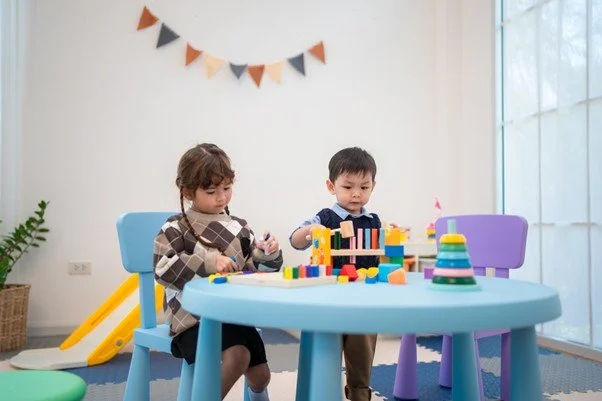
A great childcare centre is not always the most impressive-looking one. Quality in early childhood education frequently lives in systems, relationships and habits rather than in facilities or marketing materials. The 10 green flags below reflect what good early childhood practice looks like from a parent’s vantage point, and what to pay attention to when deciding where to enrol your child.
1. Teachers Greet Children by Name and with Warmth
The moment of arrival is telling. In a well-run centre, teachers know which children are coming in and acknowledge them individually. It is not about theatrical enthusiasm. Rather, it reflects a level of familiarity that takes time and attention to build. For very young children, the sense of being known by the adults in their environment is directly connected to how settled and willing to engage they feel for the rest of the day. A child who walks in and is greeted by name is a child who already knows they belong there.
2. The Classroom Environment Is Purposeful
There is a difference between a classroom that looks cheerful and one that has been designed with children’s learning in mind. In a purposefully arranged classroom, the materials on display are accessible to children rather than mounted out of reach, activity areas are clearly defined, and the space reflects what the class is currently learning instead of generic decoration. An environment set up this way communicates to children that the space belongs to them and that what they do in it has been thought about in advance.
3. Children Are Absorbed and Engaged
During a visit, pay attention to what the children are doing. In a well-managed classroom, most children are occupied, whether independently or in small groups, without requiring constant redirection. A room where most children are restless, wandering or distressed during a structured period is a more informative signal than any tour script. Engagement is not always quiet or still—it is children who are clearly involved in something and not simply waiting for the day to move on.
4. Teachers Interact at the Child’s Physical and Conversational Level
Only delivering instructions from across the room without engaging at the child’s level does not foster meaningful learning. By contrast, experienced early childhood educators crouch down to speak with children, make eye contact and ask open questions. The tone of these interactions—patient, specific and two-way—is also one of the clearest indicators of a centre’s approach to child development. A teacher who asks “what do you think happened to the caterpillar?” is doing something categorically different from one who announces the answer and moves on. The first approach builds thinking while the second builds compliance.
5. Transitions Between Activities Are Calm and Consistent
Moving between activities, from free play to lunch, from indoor time to outdoor play, is one of the more demanding parts of a preschool day, for children and for staff alike. Centres that handle transitions well have established routines that children understand and can anticipate. Watch for whether children seem to know what is coming next, whether transitions involve long stretches of unnecessary waiting, and whether the general atmosphere remains settled at these moments. Chaotic transitions are a sign that routines have not been established or are not being followed consistently.
6. The Centre Communicates Proactively With Parents
Parents should not have to ask repeatedly for information about their child’s day, progress or any concerns that have come up. Centres with strong parent communication build it into their regular practice, through written updates, verbal check-ins at pick-up or scheduled formal reviews. The more meaningful signal, however, is whether the centre raises things before parents need to ask. A teaching team that notices a child seemed subdued for three days and mentions it unprompted is paying a different quality of attention from one that only surfaces concerns when directly pressed.
7. The Teaching Team Knows Your Child as an Individual
Teacher knowledge of individual children should extend beyond developmental milestones. Educators who can speak to a specific child’s temperament, their triggers, preferred way of receiving feedback and what helps them through a difficult moment are drawing on accumulated, documented observation. When you visit, ask whether the centre keeps individual learning or care profiles for each child, how frequently they are updated and who has access to them. The presence of a structured system for this indicates that individual knowledge is maintained deliberately and not held by a single teacher and lost when circumstances change.
8. Difficult Behaviour Is Addressed Without Shame
Watch how teachers respond when a child misbehaves or becomes emotionally dysregulated. Where this is handled well, the response is calm, addressed to the behaviour and handled without drawing unnecessary attention from the rest of the class. A common pitfall, sometimes even among well-intentioned educators, is redirecting the correction towards the child’s character and not the specific action, which a child internalises very differently. Phrases like “that hurt her, let’s think about what we can do differently” reflect a considered, developmentally appropriate approach, because they name the behaviour and invite repair without attaching a label to the child. Public corrections that embarrass a child in front of peers, or raised voices used as the primary management tool, are red flags. How a centre handles its most difficult moments is as revealing as how it handles the easy ones.
9. The Centre Can Describe Its Curriculum Clearly
A well-run preschool can explain, in plain terms, what children are learning and why. This does not require a rigid academic programme, but it does require that daily activities are intentional, and that educators can articulate the developmental purpose behind what children are doing at any given point. If a tour guide cannot move beyond broad terms like “holistic learning” or “child-centred play” when asked specific questions about curriculum, that vagueness is worth following up on. Deliberate teaching looks different from supervised activity, and parents are entitled to understand which one their child will be receiving.
10. The Centre Welcomes Specific Questions
The way a centre responds to a direct or challenging question from a parent tells you something concrete about how it will handle concerns once your child is enrolled. A centre confident in its practice will engage with specifics openly, without deflecting to general reassurances or redirecting to brochures. If questions about how incidents are documented, how curriculum decisions are made or how concerns are escalated are met with vague positivity, that gap between the question asked and the answer given may say something about how much the centre expects parents to simply trust instead of truly understand. Transparency in a first visit can predict transparency throughout the enrolment.
The Visit Is the Research
Reading about what makes a good childcare centre is useful preparation. The actual assessment happens when you walk in, watch the room and notice how the people there respond to you and to the children in their care. Trust what you observe over what you are told. A centre that operates well tends not to need much persuasion.
The green flags in this article are things we are asked about regularly at Junior Champs, and things we are glad to be asked. Our small class sizes, experienced teaching team and direct approach to parent communication are not features we describe in a brochure and deliver inconsistently in practice. The best way to assess that for yourself is to come and see. Book a centre tour with Junior Champs today.